
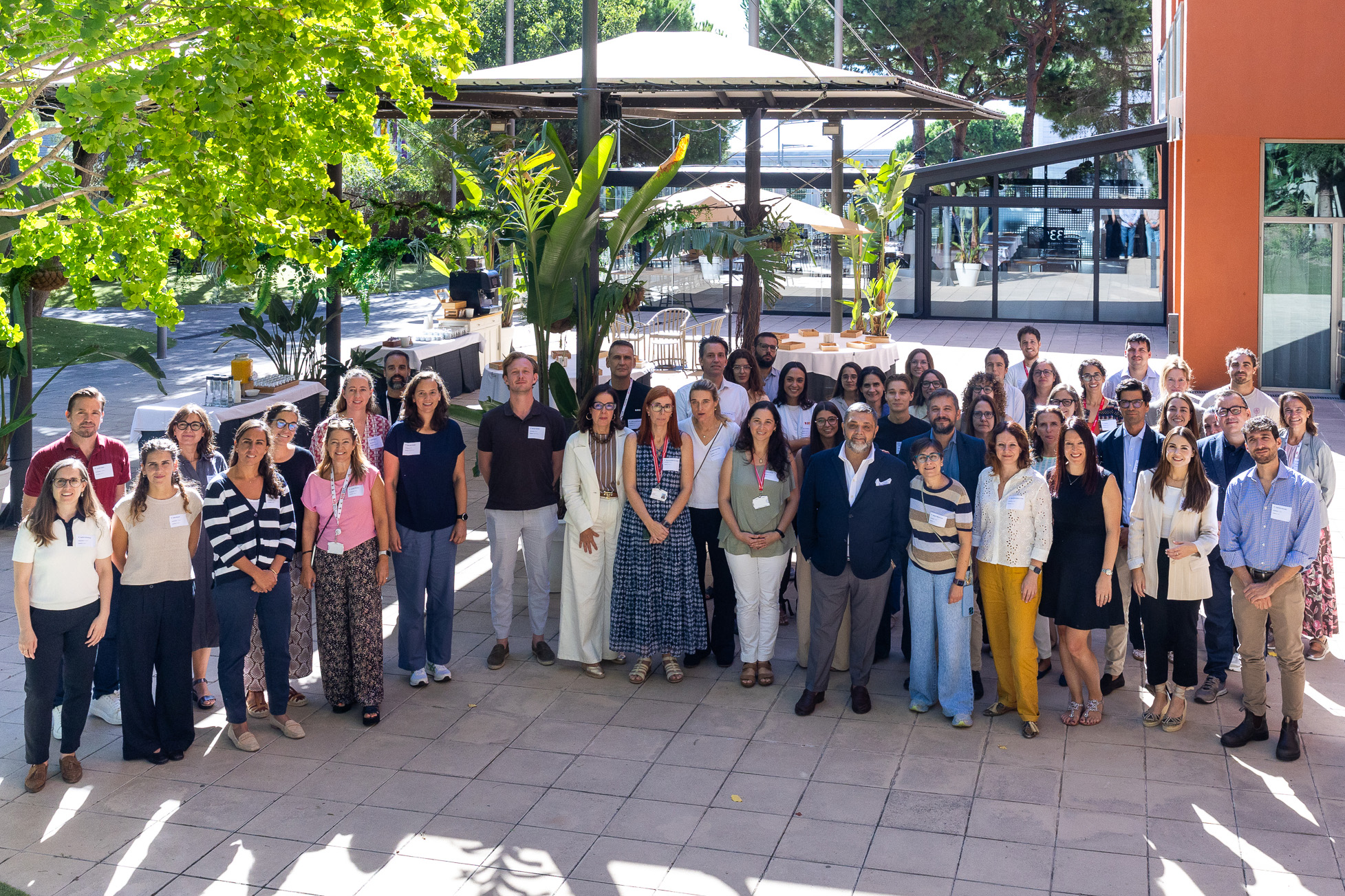
Barcelona, 22 September 2026 – Partners in EPICA-DIPG gathered in Barcelona on 21 and 22 September for the project’s kick-off meeting, bringing together the clinical, scientific, operational and patient perspectives needed to address one of the most urgent unmet needs in paediatric oncology.
Across two days of presentations and discussions, the consortium examined how clinical evaluation, companion diagnostics, advanced-therapy manufacturing, regulatory preparation and family involvement will operate as one connected research programme.
EPICA-DIPG (European Paediatric Immunotherapy Trial with Combinatory Advanced Therapy Medicinal Products for DIPG) is a five-year Horizon Europe Cancer Mission project coordinated by the Fundació Privada per a la Recerca i la Docència Sant Joan de Déu. It focuses on diffuse intrinsic pontine glioma (DIPG), a rare and aggressive paediatric brain tumour for which treatment options remain extremely limited. More than 300 new cases are diagnosed in Europe each year.
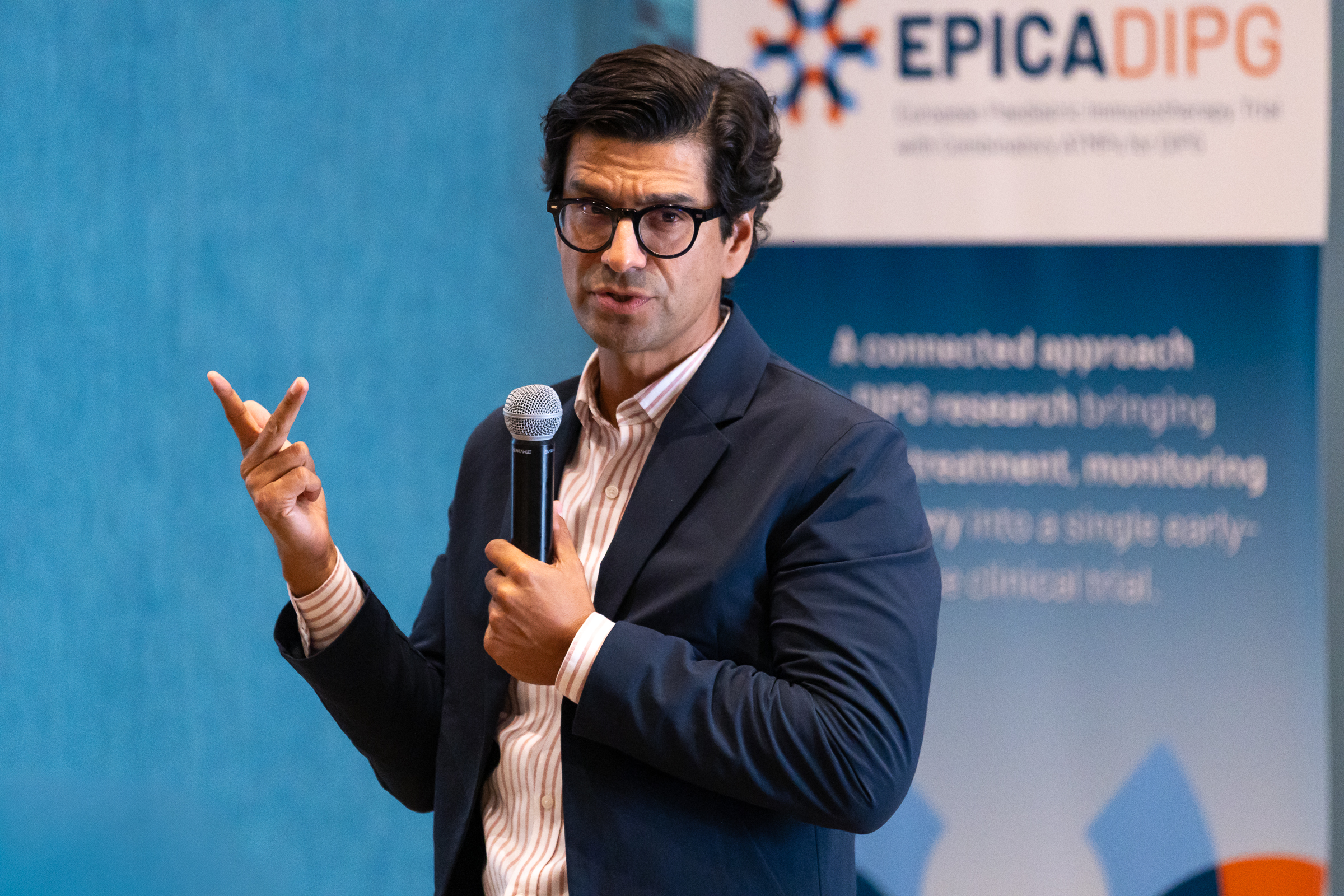
Opening the meeting, Andrés Morales La Madrid, EPICA-DIPG Coordinator and Clinical Director of the Neuro-oncology Unit at Sant Joan de Déu Barcelona Children’s Hospital, placed collaboration and careful evidence generation at the centre of the project.
“DIPG is one of the deadliest paediatric brain tumours, and a highly collaborative effort is needed to bring research and clinical care together,” he said. “In every first-in-human study, tolerability is extremely important. This is especially true for children with DIPG, who may already be neurologically fragile. Safety is therefore taken very seriously in EPICA-DIPG.”
One research system: treatment, monitoring and delivery
A central idea running through the meeting was that the clinical study cannot be considered in isolation. EPICA-DIPG connects it with companion diagnostic work and the manufacturing and logistics needed to conduct complex advanced-therapy research across specialised centres.
The clinical study is an academically driven, first-in-human study evaluating a combinatorial immunotherapy for children and adolescents with DIPG. Its primary endpoint is safety. It will also assess feasibility and generate translational evidence that may guide subsequent research. It is not designed to establish clinical benefit at this stage.
During the sessions on clinical evaluation and biological monitoring, partners considered how observations made at different points in the study could help researchers interpret what happens biologically.
“Biological monitoring is very important because it helps us understand why some patients respond and others do not,” said Jasper van der Lugt, Principal Investigator for EPICA-DIPG at the Princess Máxima Center for pediatric oncology. “By collecting material at different time points, we can see what is happening with the tumour and the immune system. This allows us to learn from every patient, including for safety and for the questions that future research will need to address.”
Delivery is part of the feasibility question
The meeting then turned to the operational chain surrounding the clinical study. Advanced therapies require specialised production, quality control, traceability, transport and coordination between manufacturing and clinical sites. Whether these elements can work consistently across countries is part of EPICA-DIPG’s feasibility question.
Ospedale Pediatrico Bambino Gesù in Rome leads the project’s advanced-therapy manufacturing and shipment coordination work and also participates as a clinical site.
“Manufacturing is a complex activity that is not limited to production,” said Angela Mastronuzzi, Head of the Hospital’s Neuro-Oncology Unit. “It also involves the traceability of the product and, in an international study, the safety of its transport. Manufacturing is therefore an important part of this project and of building the infrastructure needed for this kind of treatment.”
EPICA-DIPG will study production at specialised academic Good Manufacturing Practice sites together with shipment to participating clinical centres. Regulatory preparation, health technology assessment, and communication, dissemination and pathway-to-impact activities will help the consortium address the wider evidence, implementation and future-use questions surrounding the study. These areas are led respectively by Hospital Clínic de Barcelona–IDIBAPS, University Medical Center Utrecht and Teamit.
Families as contributors to research quality
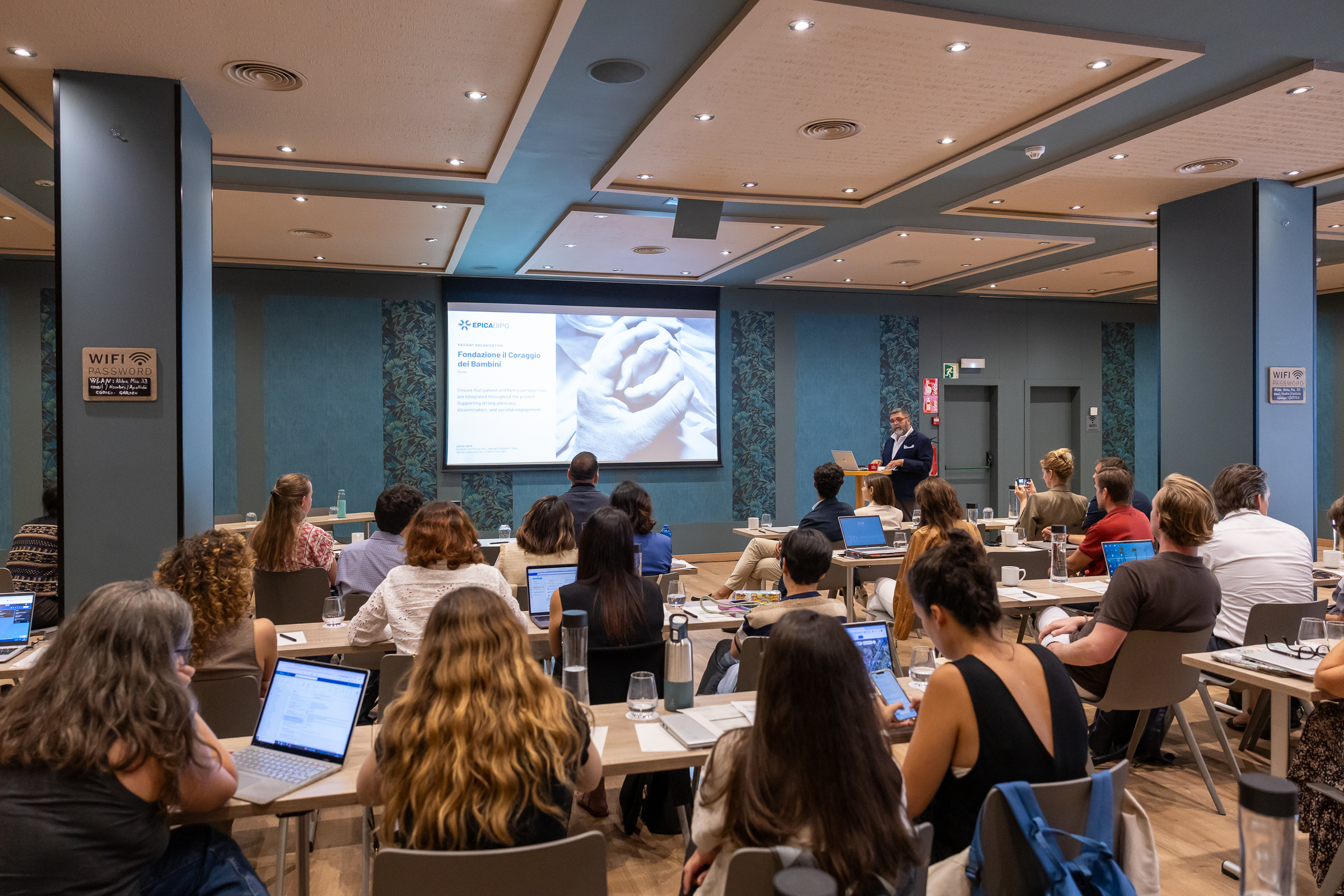
Patient and family involvement was another recurring theme during the meeting, with patient organisations from each participating country taking the stage. Within EPICA-DIPG, family perspectives form part of the project’s scientific and ethical structure rather than being added after decisions have been made.
This work is coordinated by Vereniging Kinderkanker Nederland and brings together Spain’s Pulseras Candela and Fondazione Il Coraggio dei Bambini in Italy. Each organisation contributes the perspectives of families and patient communities in its country, helping the project account for different experiences, questions and cultural contexts.
“Families can be involved in every part of a study, starting with its design and contributing to the protocol, but also in the dissemination of the results,” said Liselot Hoornweg, Coordinator of Patient Participation in Research at Vereniging Kinderkanker Nederland. “The lived experience of receiving a DIPG diagnosis and accompanying a child through the disease can add enormous value to the way the study is designed and carried out. Having a patient organisation from each participating country also helps the project take different cultural perspectives into account.”
“We will collaborate in the design, review and evaluation of the clinical protocol and of all the materials addressed to patients and families,” said Nieves Tejeda, Coordinator of Pulseras Candela. “Our role is to look at these materials from the family’s point of view: whether they are clear, whether they answer the questions families may have and whether they reflect what it really means to live with a serious and rare childhood cancer.”
Alessandro Cannolicchio, President of Fondazione Il Coraggio dei Bambini, emphasised how direct family experience can complement scientific and clinical knowledge.
“Researchers bring scientific and clinical expertise, while parents bring direct experience of the disease and its effect on family life,” he said. “By working together, families can make a real contribution to research and to how the project supports and communicates with parents.”
From a kick-off meeting to a connected research programme
By the close of the meeting, the consortium had established a common framework for the work ahead. Safety remains the clinical study’s primary endpoint, while biological monitoring, manufacturing and cross-centre implementation will provide complementary evidence on feasibility.
“Although this is a highly complex approach from the clinical, manufacturing and regulatory perspectives, EPICA-DIPG could provide valuable evidence about its feasibility,” said Alessandra Magnani, Head of the Advanced Therapies Platform at Sant Joan de Déu Barcelona Children’s Hospital. “That practical knowledge could also help inform other areas of advanced-therapy research.”
The Barcelona meeting marked the beginning of that shared work. Over the next five years, EPICA-DIPG will test its assumptions and document what succeeds, what proves difficult and what future research still needs to resolve.


