
DIPG Explainer
Diffuse intrinsic pontine glioma
Diffuse intrinsic pontine glioma (DIPG) is a rare and aggressive paediatric brain tumour that develops in the brainstem.
Despite decades of research, it remains one of the most challenging cancers to treat, with very limited therapeutic options and a persistently poor prognosis.
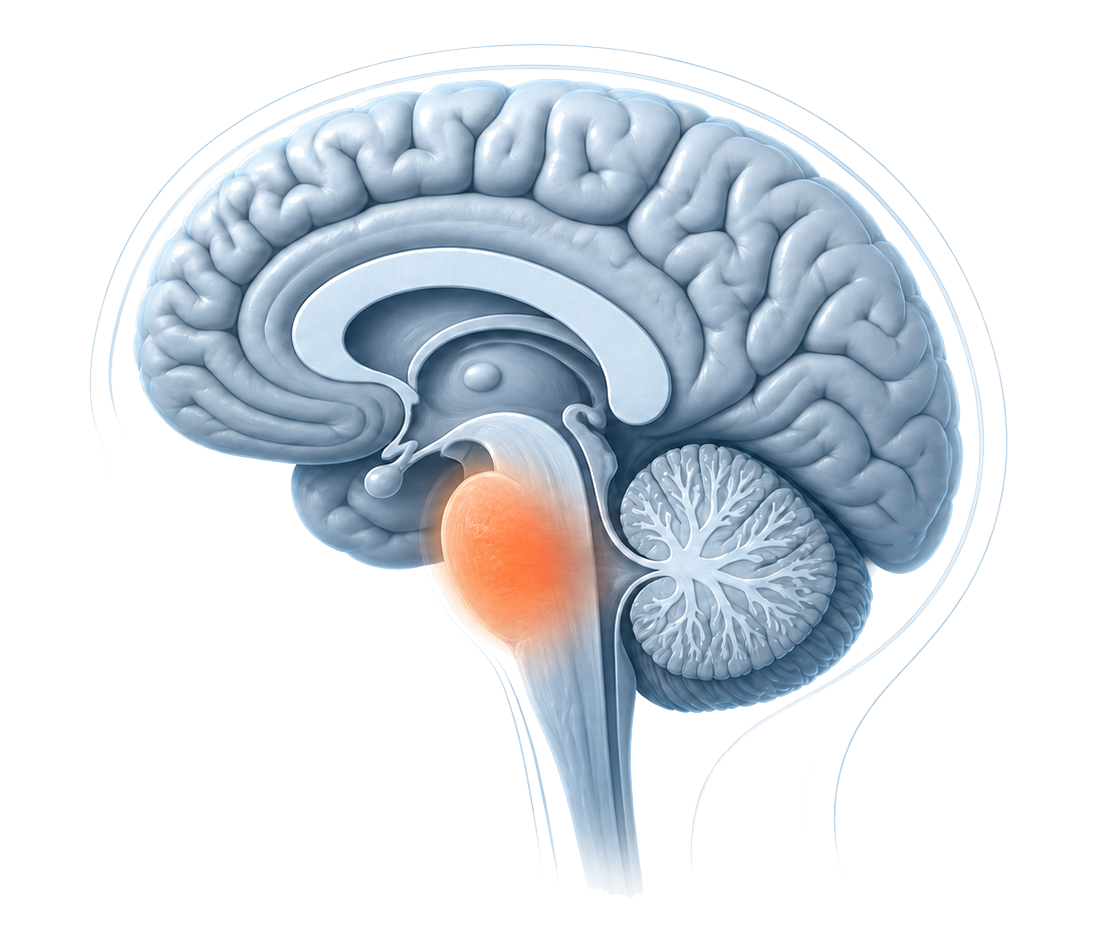
The four terms behind DIPG
These four terms describe how the tumour grows, where it develops and how it is described.
D
Diffuse
Diffuse growth means tumour cells spread into surrounding brain tissue, making surgical removal impossible.
I
Intrinsic
Intrinsic to the brainstem, the tumour develops in a critical region controlling essential functions such as breathing and movement.
P
Pontine
Pontine refers to the pons, where DIPG occurs, a location that limits both treatment options and biological access.
G
Glioma
Glioma indicates an agressive brain tumour with a median survival of around 9–12 months and no curative treatment to date.
Diagnose
Survival
TREATMENT OPTIONS
The unmet need
The unmet need in DIPG is not only about identifying new treatments, but also about creating the conditions to evaluate them properly. These include:
Addressing these challenges requires coordinated efforts that go beyond testing a single intervention.


